What to Expect & What to Do After the Job
🐐 What to Expect During Goat Removal
1. Fast Eaters, Not Magic Erasers
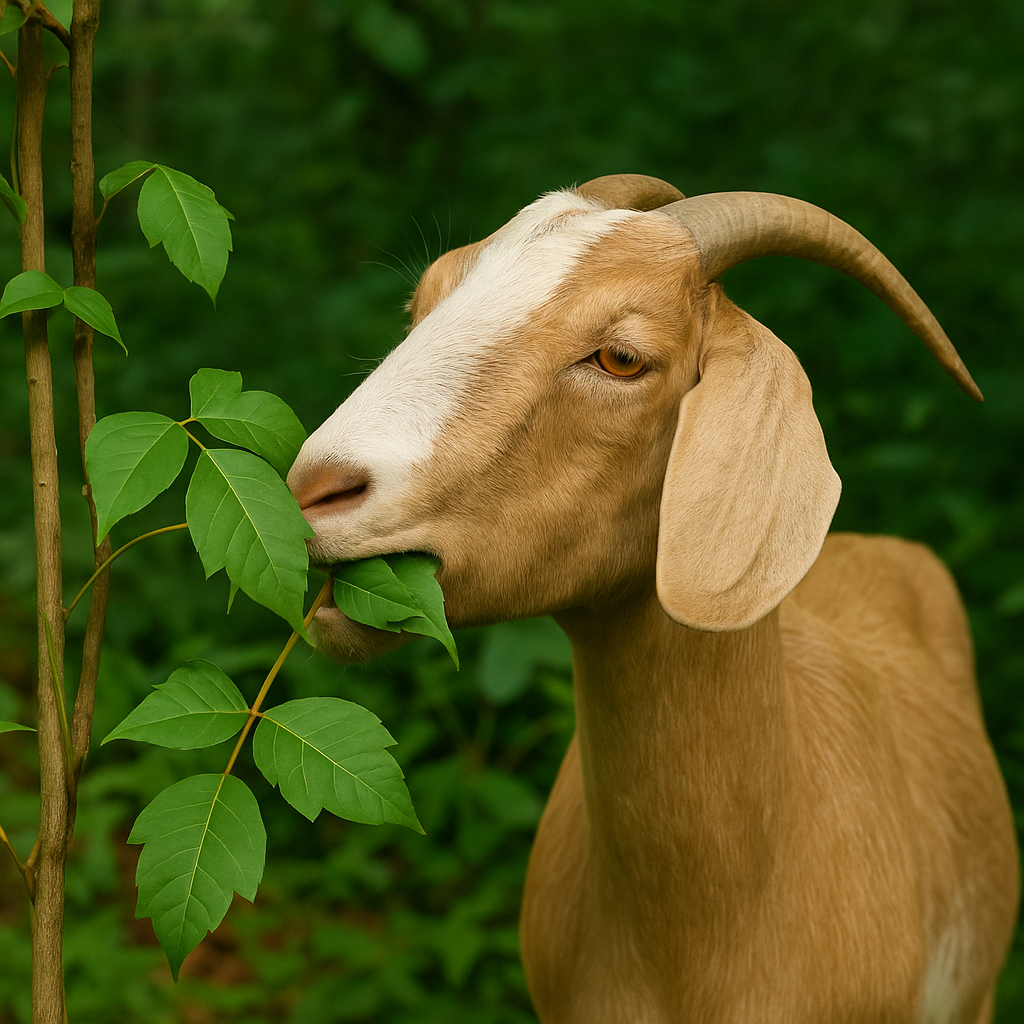
Goats love poison ivy and will happily eat it down to the stems. In most cases, you’ll see a dramatic reduction within 1–3 days depending on the size of the area and number of goats. However, goats do not dig up roots—so regrowth is expected without follow-up.
2. Temporary Browsing Damage
They’ll eat leaves, vines, and even bark. If poison ivy is climbing trees or structures, the goats will strip everything they can reach.
3. Complete Clearing is Rare
If poison ivy is growing in dense underbrush or among plants goats avoid (like ferns or thorny bushes), some patches may remain. These can usually be cleared in a second visit or manually afterward.
4. Safe & Contained Grazing
We use secure fencing to keep goats on task. We monitor their work and remove them once the poison ivy is sufficiently cleared or when the area has been grazed down.
5. Natural Resting Periods
Goats won’t be standing and eating the entire time. For a portion of the day, you may see them lying down—this is completely normal. Goats are ruminants, and lying down is a natural part of their digestion process as they chew cud and rest between active grazing periods.
🌱 What to Do After Goat Removal
1. Move to Treatment
If you know where the poison ivy was growing, you can begin follow-up treatment immediately—whether that’s digging up roots, laying down cardboard, or using natural/herbicide applications.
If you’re unsure where the vines were, give the area a few days to start regrowing. New leaves can help you identify spots that need further attention.
2. Target the Roots
Because goats don’t kill the roots, you’ll need to follow up with additional treatment. Choose from the following options:
→ Chemical Treatment
For targeted and effective root elimination:
- Use a glyphosate-based product like Roundup Poison Ivy Plus Tough Brush Killer
- Or try Ortho MAX Poison Ivy & Tough Brush Killer
- Apply the chemical herbicide (such as glyphosate) directly to the foliage at the highest ‘safe concentration’ directed on the container. This maximizes its effectiveness while minimizing repeat applications.
- Do this on a still, dry day. Do not broadcast spray an area or spray on a windy or rainy day.
- A one-time strong application is less detrimental on the ecosystem than many light applications over time. The tendency is to be fearful of over-applying, so you apply lightly, the plant doesn’t die back totally, so you hit it again, and again… but this also affects the local flora and fauna.
- Learn more about persistent herbicides that can poison gardens and damage crops, and avoid using them.
→ Non-Chemical Treatment
For a natural approach:
- Spray with horticultural vinegar (20% or higher acetic acid)
- Mix vinegar with a small amount of dish soap to help it stick to leaves
- Reapply every few days for stubborn patches
- For ground suppression, lay down cardboard, mulch, or black plastic to block sunlight and smother roots over time
- Dig out visible root clusters with a shovel or root puller
→ Sheet Mulching (Highly Recommended)
After applying chemical or natural treatments, sheet mulching is a fail-proof way to suppress regrowth and rebuild healthy soil. Here’s how:
- Lay down 2 layers of cardboard over the treated area
- Top with 12–24 inches of wood chips
- Let it sit for a season to solarize and smother any remaining roots
Why it Works:
- Wood chips neutralize chemicals and heavy metals, improve fungal biomass, reduce erosion, and retain moisture
- This simulates poison ivy’s former soil protection role in a safer way
- If chemical herbicide was not used, consider using plywood or black plastic to block regrowth. Leave in place for a full year
Caution: Avoid planting food crops within the first year, especially if herbicides were used. The soil may still carry urushiol or chemical residue.
3. Replant or Reseed
Once poison ivy is under control, you can prevent it from returning by:
- Planting ground cover or grass
- Spreading native seeds that compete with invasive vines
- Installing landscape fabric or weed barrier
Recommended Ground Covers:
- Creeping thyme (sun-loving, low-growing)
- Dutch white clover (nitrogen fixer, suppresses weeds)
- Ajuga / bugleweed (shade-tolerant and dense)
- Pachysandra (for deep shade)
- Creeping sedum (great for sunny spots)
- Native grasses and wildflowers to create long-term coverage
4. Watch for Regrowth
Check the area regularly for 6–12 months. Poison ivy can return, especially in shaded, moist areas. A follow-up goat visit or touch-up removal may be needed.
⚠️ Important Notes
- Poison ivy oils can remain on stems and roots even after goats eat the leaves. Use gloves when handling cleared areas.
- Goats are not a one-time fix—they’re the first, natural step in a larger poison ivy control plan.
- Some regrowth is normal and expected. The goal is to exhaust the root system over time.
💬 Questions or Want a Follow-Up?
WNY Party Goats (a division of Only Goats Farm) services the Western New York area for poison ivy removal and other related goatscaping services.
📧 Email: contact@onlygoatsfarm.com
📞 Call or text: 716-449-5649
Contact us anytime! We’re happy to check on regrowth or schedule a return visit if needed.

Leave a Reply